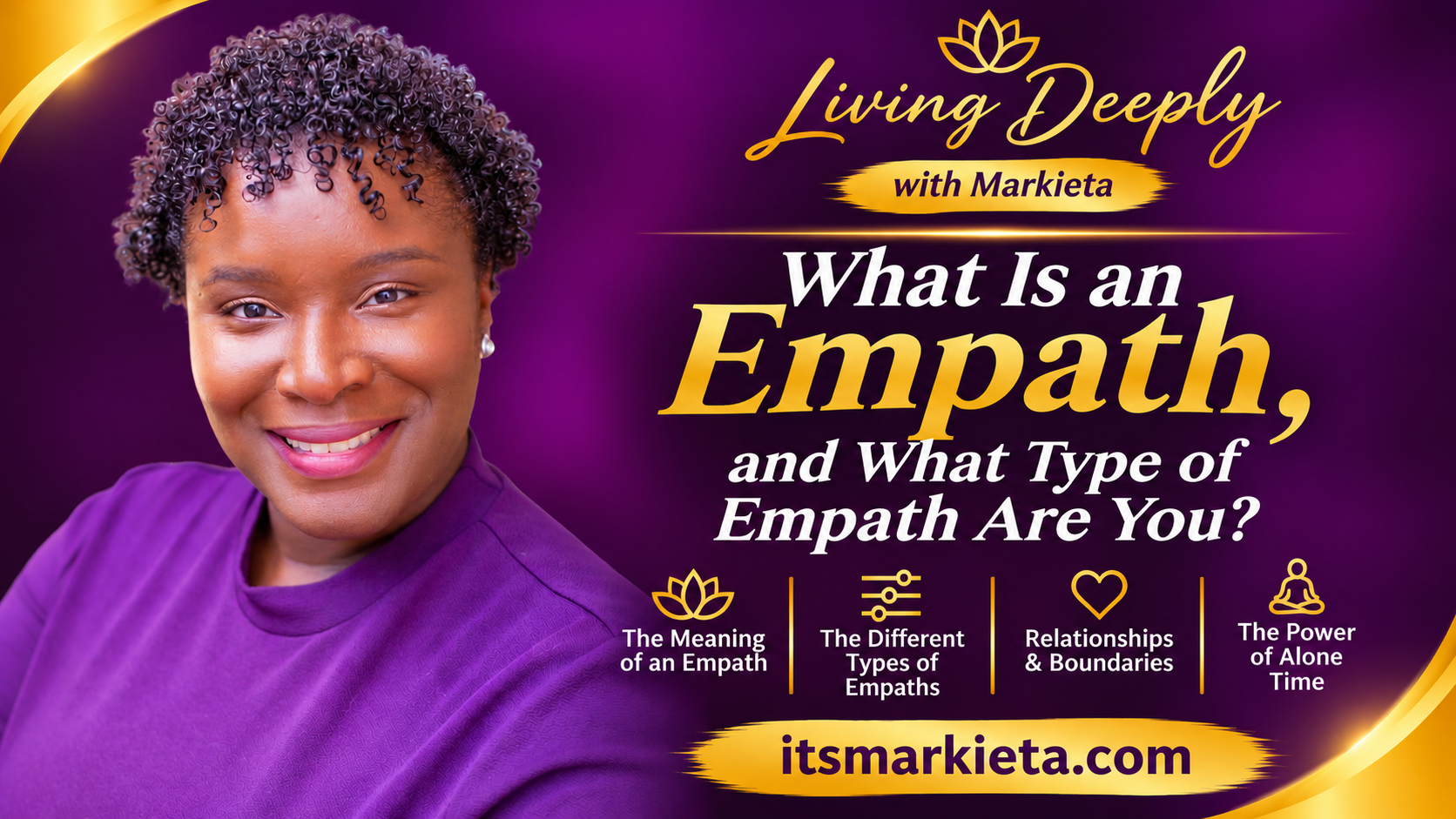
What Is an Empath, and What Type of Empath Are You? Understanding Your Sensitivity and Intuitive Gifts
Have you ever walked into a room feeling perfectly fine, only to leave feeling emotionally exhausted?
Maybe you can tell when somebody is upset before they even say a word. Perhaps you've experienced meaningful dreams, strong intuition, or an emotional connection with people that you can't quite explain.
Or maybe you're somebody who genuinely loves people but needs plenty of time alone to feel peaceful again.
If any of these experiences sound familiar, you might be an empath.
Being an empath can be a beautiful gift. But without understanding your sensitivity, it can also leave you feeling overwhelmed, emotionally drained, and misunderstood.
The good news is that you don't have to spend your life carrying everybody else's emotions.
Understanding what type of empath you are can help you embrace your gifts, establish healthier boundaries, and create a life that supports your emotional and spiritual well-being.
What Is an Empath?
An empath is someone who experiences heightened sensitivity to the emotions, energy, and sometimes physical sensations of other people.
Most people experience empathy, which is the ability to understand and relate to someone else's feelings.
However, people who identify as empaths often describe experiencing those feelings much more intensely.
For example, you might start your morning feeling happy and peaceful. But after spending time with somebody who's angry, anxious, or frustrated, your own mood changes.
You might even feel compelled to make that person feel better because their emotional state is affecting yours.
Some empaths are especially sensitive to noise, crowded environments, strong smells, or constant social interaction.
Others experience strong intuition, meaningful dreams, or deep connections with nature and animals.
Dr. Judith Orloff, psychiatrist and author of The Empath's Survival Guide, describes several types of empaths, including physical, emotional, and intuitive empaths.
Understanding these different experiences can help you recognize how your sensitivity shows up in everyday life.
The Three Main Types of Empaths
1. Physical Empaths
Physical empaths are especially sensitive to physical sensations and changes in their environment.
They may notice tension, discomfort, or exhaustion when spending time around people who are stressed or physically uncomfortable.
For example, you might feel perfectly fine before entering a stressful environment but leave feeling physically drained.
Physical empaths may experience:
Physical tension around emotionally distressed people.
Exhaustion after spending time in crowded environments.
Strong responses to other people's discomfort.
Relief when spending time alone in peaceful surroundings.
If you recognize these experiences, pay attention to the situations that leave your body feeling overwhelmed.
Your physical well-being deserves just as much attention as your emotional well-being.
2. Emotional Empaths
Emotional empaths are particularly sensitive to other people's feelings.
They may recognize sadness, frustration, anger, or anxiety before somebody communicates those emotions.
But one of the greatest challenges for emotional empaths is feeling responsible for changing how other people feel.
I personally relate to this experience.
When I notice somebody's energy affecting mine, my natural instinct is often to figure out how to redirect that energy.
Sometimes that means making a joke.
Other times, I might offer encouragement, advice, or a strategy to help them work through whatever they're experiencing.
And while those abilities can be valuable, I've learned something important.
Just because I recognize somebody else's emotions doesn't mean I'm responsible for fixing them.
Emotional empaths may experience:
Changes in their mood after interacting with certain people.
Difficulty separating their emotions from those of others.
Feeling responsible for keeping everybody happy.
Emotional exhaustion from constantly supporting others.
A strong desire to avoid conflict or negative energy.
Learning to establish emotional boundaries is especially important for this type of empath.
You can be compassionate without carrying everybody else's problems.
3. Intuitive Empaths
Intuitive empaths experience a strong connection with their intuition and inner knowing.
Sometimes they recognize something without having a clear explanation for how they know it.
Intuition may show up through dreams, physical sensations, emotional impressions, or a deep sense of certainty.
Personally, I've experienced intuition in different ways throughout my life.
There have been times when dreams brought something important to my attention.
Other times, I've experienced a strong feeling that something wasn't right.
Learning to trust my intuition has become an important part of my spiritual journey.
And I've learned that understanding my intuitive experiences helps me become more confident in myself and my decisions.
The Seven Types of Intuitive Empaths
Dr. Orloff's framework also explores several specialized types of intuitive empaths.
These categories offer different ways to understand spiritual sensitivity and intuitive experiences.
Telepathic Empaths
Telepathic empaths experience intuitive impressions about other people without direct communication.
For example, you may suddenly think about someone before hearing from them or sense that something important is happening in their life.
Precognitive Empaths
Precognitive empaths experience premonitions about future events.
These impressions may arise through dreams, sudden feelings, or moments of inner knowing.
Dream Empaths
Dream empaths experience meaningful dreams that may provide personal or spiritual guidance.
Some dreams bring clarity about relationships, decisions, or situations that deserve attention.
For people who experience strong dream intuition, paying attention to recurring themes and feelings can be especially meaningful.
Mediumship Empaths
Mediumship empaths experience spiritual connections with spirits or the spiritual realm.
Some people focus on ancestral connections, while others prefer connecting with their higher self or higher-level spiritual guides.
Your spiritual journey is personal, and you get to decide which forms of connection align with your beliefs.
Plant Empaths
Plant empaths experience a strong connection with plants and their natural energy.
They may find peace in gardening, caring for houseplants, or spending time surrounded by greenery.
Earth Empaths
Earth empaths feel especially connected to the planet, weather, seasons, and natural environments.
They may experience a deep sense of grounding and renewal when spending time outdoors.
Animal Empaths
Animal empaths experience a strong emotional or intuitive connection with animals.
They may be particularly sensitive to an animal's mood, behavior, or needs.
For some people, animals provide companionship without the same emotional expectations that often accompany human relationships.
Can You Be More Than One Type of Empath?
Absolutely.
You may recognize yourself as both an emotional and intuitive empath.
Perhaps you experience meaningful dreams, feel deeply connected to animals, and become emotionally overwhelmed around certain people.
You don't have to choose just one category.
The purpose of understanding these different types is not to place yourself inside a box.
It's to recognize your experiences and better understand your needs.
Want to explore your empath traits?
Take my Empath Quiz to learn more about your sensitivity and discover which empath descriptions resonate with you.
Why Empaths Often Struggle in Relationships
One of the most challenging experiences for many empaths is balancing the desire for companionship with the need for independence.
You can love somebody deeply and still become overwhelmed by spending too much time together.
You can enjoy a romantic relationship while needing significant periods of solitude.
And you can want love without wanting somebody constantly around you.
This is something I personally understand.
When I'm around people for extended periods, I can become overstimulated.
Conversations that normally wouldn't bother me may begin to feel exhausting.
Simple questions can start feeling like demands.
And sometimes I just want to be left alone.
That doesn't mean I don't care about the people in my life.
It means I need time to reconnect with myself.
Love Does Not Eliminate the Need for Boundaries
Many women have been taught that loving someone means always being emotionally available.
But healthy relationships require mutual respect for individual needs.
One partner may desire constant companionship, while the other needs substantial alone time.
Neither person's needs are automatically wrong.
However, those differences can create relationship challenges when they aren't understood or respected.
Love and compatibility are not always the same thing.
You can love somebody and still recognize that your emotional needs are different.
And you shouldn't have to abandon your peace to prove that you love someone.
Why Alone Time Is So Important for Empaths
There's a difference between loneliness and solitude.
Loneliness involves feeling disconnected or lacking desired companionship.
Solitude is intentionally spending time alone.
For many empaths, solitude is essential to emotional balance.
Personally, I experience some of my greatest moments of peace when I'm alone in a clean, quiet environment that smells wonderful, especially when I'm enjoying my essential oils.
I don't have to manage anybody else's feelings.
I don't have to entertain anyone.
I don't have to respond to conversations or meet somebody else's expectations.
I can simply exist.
And that feels incredibly peaceful.
If you're an empath who needs alone time, stop treating that need like something you should feel guilty about.
You deserve opportunities to recharge without having to explain or defend yourself constantly.
How to Recognize What Type of Empath You Are
Consider these questions:
Do you notice your mood changing when you're around emotionally distressed people?
Do you experience physical tension or exhaustion in certain environments?
Do you frequently experience strong intuition or a deep sense of knowing?
Do your dreams carry meaningful messages or guidance?
Do you feel especially connected to animals, plants, or nature?
Do you become overwhelmed by too much social interaction?
Do you need significant alone time to feel emotionally balanced?
Your responses may help you recognize the empath traits that resonate most strongly with you.
You may discover that several types describe your experiences.
Take the Empath Quiz
If you're still wondering what type of empath you might be, I've created a quiz to help you explore your sensitivity.
The quiz is designed to encourage self-reflection and help you recognize different empath characteristics.
Take the Empath Quiz at itsmarkieta.com/empathquiz
Five Ways to Protect Your Energy as an Empath
Understanding your sensitivity is important, but learning how to support yourself is just as valuable.
1. Recognize When Your Energy Changes
Pay attention to how you feel before and after interacting with certain people.
Notice which environments leave you feeling peaceful and which ones leave you emotionally exhausted.
2. Stop Taking Responsibility for Everybody's Emotions
You can recognize somebody's sadness without making it your responsibility to eliminate it.
Supporting others should not require sacrificing your own emotional well-being.
3. Establish Clear Boundaries
You have the right to decide how much time, energy, and emotional support you can reasonably provide.
Boundaries help you maintain healthier relationships while honoring your own needs.
4. Make Solitude a Priority
If alone time helps you recharge, make it part of your regular routine.
You don't have to wait until you're completely overwhelmed before giving yourself permission to rest.
5. Trust Yourself
Pay attention to your intuition, your emotional responses, and your personal needs.
The more you understand yourself, the easier it becomes to make decisions that support your peace.
Final Thoughts: Being an Empath Is a Gift
For years, sensitive people have been told they're too emotional, too sensitive, or that they need thicker skin.
But I believe sensitivity can be a beautiful gift.
It can allow us to connect deeply with others, recognize emotional needs, experience meaningful intuition, and appreciate the world around us.
However, those gifts become much easier to embrace when we understand our boundaries and learn how to protect our energy.
You don't have to carry everybody else's emotions to prove that you care.
You don't have to sacrifice your peace to maintain relationships.
And you don't have to become less sensitive to live a meaningful, fulfilling life.
Your sensitivity deserves understanding, and your peace deserves protection.
💜 Listen to the companion podcast episode:
itsmarkieta.com/livingdeeplypodcast
Ready to Understand Your Empath Gifts?
Whether you're just discovering your sensitivity or you've identified as an empath for years, understanding yourself is an important part of personal growth.
Start by taking the Empath Quiz:
If you're a woman who's ready to strengthen your intuition, establish healthier boundaries, and create more peace in your life, I also offer private Empath Coaching for Women.
Apply for private coaching:
And for more conversations about sensitivity, intuition, relationships, and personal growth, listen to Living Deeply with Markieta.
This article draws on empath categories discussed in Dr. Judith Orloff's work and personal reflections on sensitivity and spirituality.